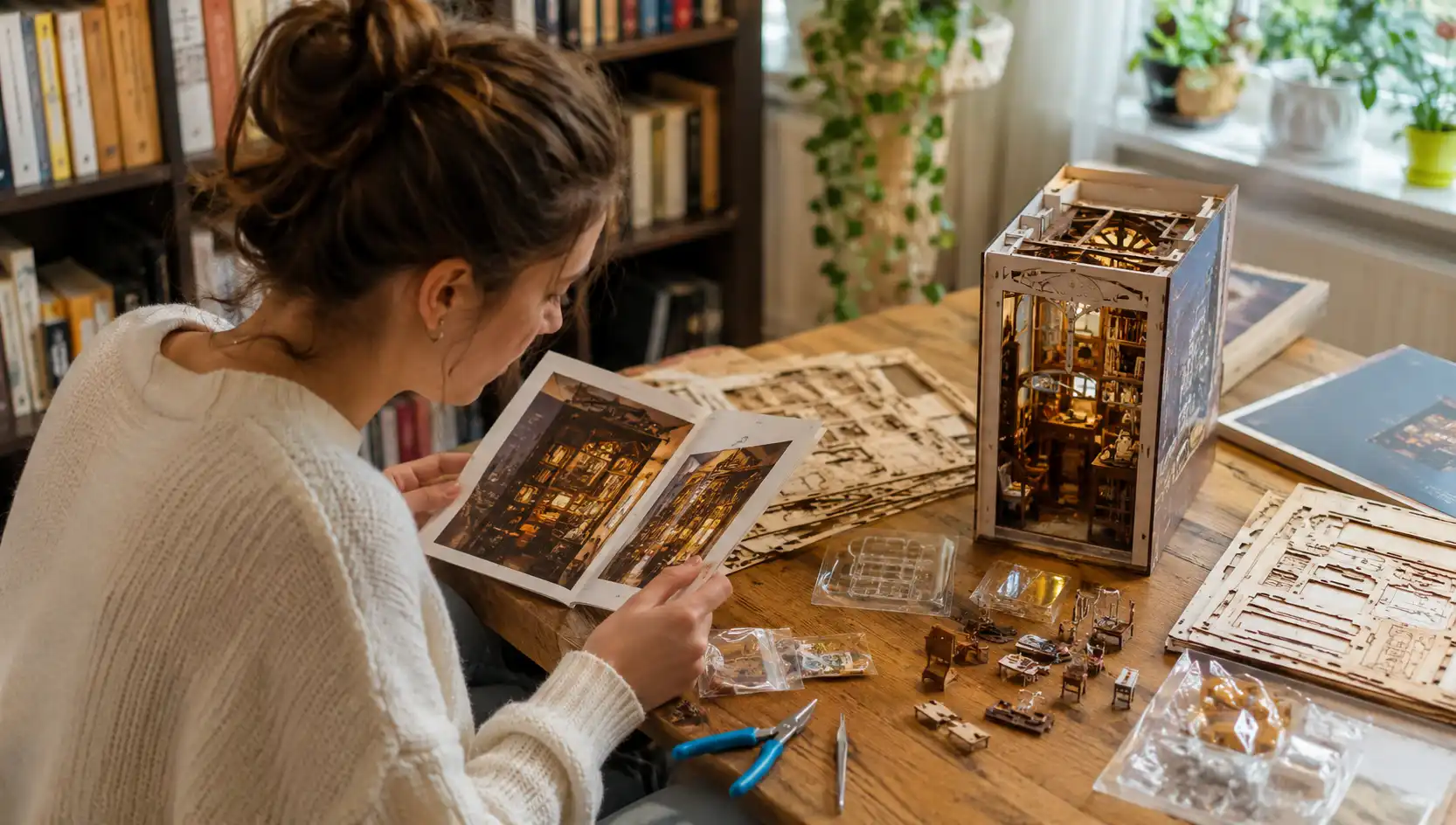
A book nook that looks beautiful online can still feel frustrating if the difficulty level and components are poorly matched.
Table of Contents
Why Choosing the Right Beginner Book Nook Matters
The first book nook experience usually determines whether the hobby feels relaxing or unnecessarily overwhelming.
Many beginners focus almost entirely on appearance at first. A miniature alleyway with glowing LED lighting or a detailed fantasy bookstore may look impressive in photos, but visual style alone rarely tells the full story.
Difficulty levels vary far more than most people expect.
Some kits contain:
- hundreds of tiny components;
- fragile laser-cut wood pieces;
- advanced wiring sections;
- dense instruction manuals;
- intricate miniature diorama details.
Others are intentionally beginner friendly, with pre-painted parts, simplified layouts, and fewer alignment-sensitive components.
That difference matters because frustration usually appears long before the final result is visible.
Instruction quality is another overlooked factor. Clear diagrams and organized packaging can make even moderately complex model kits feel manageable. Poor labeling, on the other hand, often turns simple projects into confusing ones.
Experienced hobbyists usually recommend starting with a kit that balances visual detail and approachable complexity rather than choosing the most elaborate design immediately.
The goal of a first project is confidence, not endurance.
What to Look for in a Book Nook Kit
Most beginner frustration comes from choosing a kit that looks attractive but doesn’t match the builder’s patience level or workspace preferences.
Difficulty levels are more important than themes
A highly detailed cyberpunk alley or fantasy library may seem appealing initially, but advanced builds often involve delicate alignment work and complex wiring.
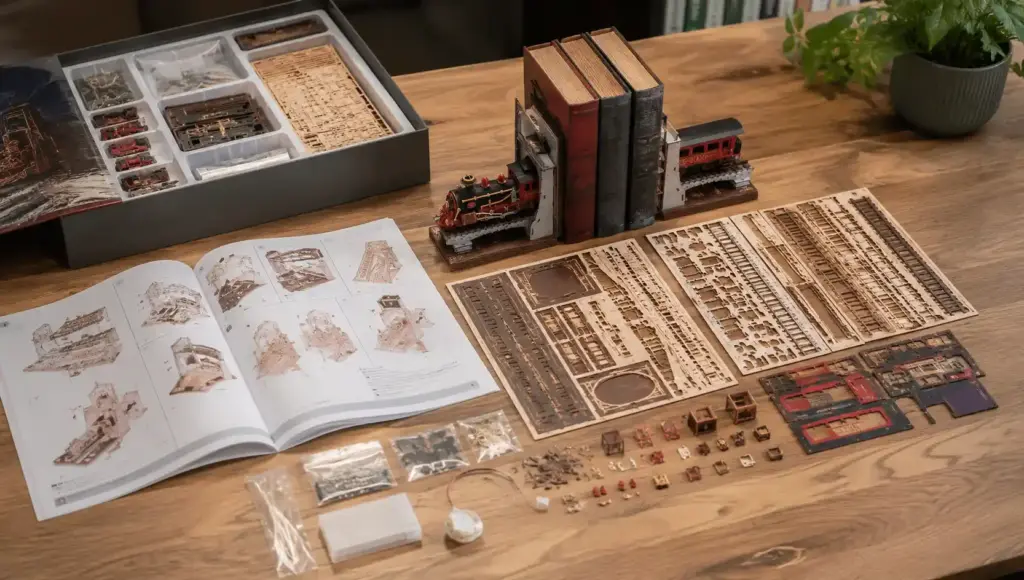
Beginner friendly book nook kits usually include:
- moderate parts count;
- larger structural pieces;
- simplified lighting systems;
- clearly separated components;
- easier-to-follow assembly flow.
That creates a smoother learning curve without sacrificing visual appeal.
Material quality changes the entire experience
Laser-cut wood quality affects everything from fit precision to structural stability.
Lower-quality components may splinter, warp slightly, or require excessive sanding before pieces align correctly. Better-cut components usually fit together naturally with less pressure and fewer corrections.
Pre-painted parts can also make a major difference for beginners who want a more approachable first project.
Instruction clarity matters more than complexity
Some advanced-looking kits are surprisingly manageable because the instructions are exceptionally well organized.
Good instruction quality usually includes:
- labeled diagrams;
- logical sequencing;
- consistent component numbering;
- realistic scale references;
- clear battery and LED guidance.
A visually simpler model with poor documentation often becomes harder than a more advanced kit with excellent organization.
Book Nook Kit Comparison: Which Features Matter Most?
Not every feature has the same impact on the actual hobby experience.
LED lighting adds atmosphere but also complexity
Lighting systems create much of the charm associated with modern book nooks. Warm-lit windows, lantern effects, and hidden alley lighting can dramatically improve the final appearance.
At the same time, LED wiring introduces extra precision work.
For first-time builders, simpler plug-based lighting systems are often easier to manage than advanced concealed wiring layouts.
Dust covers are more useful than many beginners expect
Miniature diorama scenes collect dust surprisingly quickly.
A dust cover helps preserve:
- lighting clarity;
- painted textures;
- miniature furniture;
- paper decorations;
- overall display quality.
This becomes especially important for open-front book nook designs.
Assembly time affects enjoyment
A project that stretches too far beyond someone’s available free time can lose momentum halfway through.
Some hobbyists enjoy long, intricate weekend builds. Others prefer projects that feel achievable within several evenings.
Choosing a manageable assembly time usually leads to a more satisfying first experience.
How to Choose a Book Nook Theme You Will Actually Enjoy
Theme selection affects motivation more than technical specifications alone.
A visually appealing project often feels easier simply because the builder stays emotionally engaged with the scene itself.
Fantasy and library themes suit most beginners
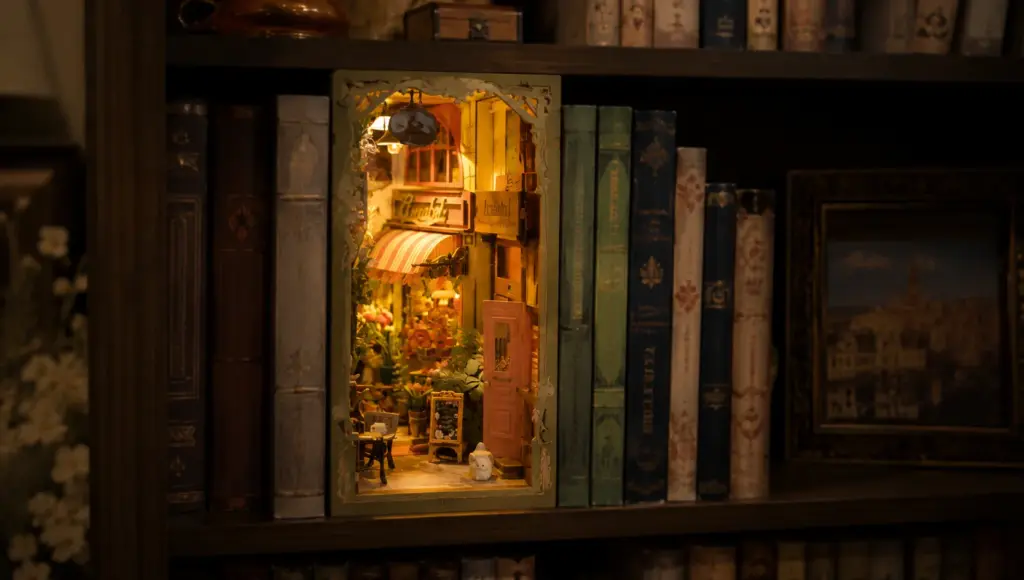
Bookstores, reading corners, old libraries, and fantasy streets remain popular partly because their visual structure is forgiving.
Small alignment imperfections usually blend naturally into the environment.
That makes them less stressful for beginners than highly symmetrical futuristic scenes.
Dense cyberpunk kits can feel visually overwhelming
Some highly detailed futuristic book nooks contain enormous numbers of miniature signs, layered lighting effects, and tightly packed components.
They look impressive, but first-time hobbyists sometimes underestimate how visually demanding those layouts become during longer sessions.
Seasonal themes create a different pacing experience
Winter streets, rainy cafés, and nostalgic alleyways often encourage slower, detail-focused building.
People looking for calming model kits frequently gravitate toward these atmospheric themes because the finished scene feels immersive even before every detail is completed.

Signs That a Book Nook Kit Is Beginner Friendly
Experienced hobbyists usually notice several small indicators immediately when evaluating a kit.
Well-organized packaging reduces mistakes
Clearly separated components make the project feel calmer from the start.
When parts arrive loosely mixed together, beginners spend unnecessary energy identifying components instead of enjoying the miniature environment itself.
Moderate parts count creates better pacing
A large parts count does not automatically mean better quality.
For first projects, balanced complexity is usually more enjoyable than extreme detail density.
Reliable quality control prevents frustration
Misaligned laser cuts, warped panels, or missing miniature components quickly interrupt the building rhythm.
Brands known for consistent quality control — including well-established beginner-friendly lines such as Robotime and Rolife — are often recommended because their kits maintain more predictable fit and instruction standards.
That consistency matters more than dramatic visual complexity for a first-time builder.
Frequently Asked Questions About Beginner Book Nook Kits
Choosing a first book nook kit usually raises practical questions about difficulty, materials, and overall hobby fit.
What is the best book nook kit for beginners?
The best book nook kit for beginners usually combines moderate complexity, clear instructions, quality materials, and approachable lighting systems.
Are LED book nook kits difficult for beginners?
Not necessarily. Simpler LED systems with pre-configured wiring are often manageable even for first-time hobbyists.
How long does a beginner book nook project usually take?
Most beginner friendly book nook kits take anywhere from several evenings to a full weekend, depending on parts count and detail level.
What materials are commonly used in book nook kits?
Many kits use laser-cut wood, printed paper textures, acrylic details, LED components, and pre-painted miniature elements.
Do all book nook kits include tools?
No. Some include basic tools and adhesives, while others expect hobbyists to prepare them separately before starting the project.
Beginner Friendly Book Nook Kits Worth Comparing
Some miniature diorama themes focus on atmosphere and lighting, while others emphasize intricate architectural detail. Comparing several beginner-friendly styles often makes the choice much easier.
Final Thoughts
Choosing a first book nook is usually less about finding the most visually impressive design and more about finding a project that feels enjoyable from beginning to end.
A balanced combination of clear instructions, manageable complexity, thoughtful lighting, and reliable materials often creates a much better experience than simply choosing the most detailed scene available.
The hobby becomes far more rewarding when the kit supports curiosity instead of testing patience too early.