
Breaking delicate wooden parts usually happens because beginners rush the early assembly steps instead of preparing pieces carefully first.
Table of Contents
How to Build 3D Wooden Puzzles for the First Time
Learning how to build 3d wooden puzzles feels intimidating at first, especially when the model contains delicate pieces, moving gears, or tightly interlocking parts. Many beginners assume they need advanced crafting skills before even opening the box.
In reality, most problems happen for much simpler reasons:
- applying too much pressure;
- removing pieces too quickly;
- skipping sanding;
- forcing misaligned parts;
- rushing mechanical sections.
Patience matters far more than experience.
Laser-cut wooden models are usually designed to guide the assembly process gradually. Even complex mechanical builds become manageable when approached step by step instead of trying to “finish quickly.”
A calm workspace also changes everything. Building on a crowded table often leads to lost parts, accidental breakage, or assembly mistakes that are difficult to reverse later.
One helpful mindset shift is treating the project more like careful crafting than puzzle solving. Unlike flat jigsaw puzzles, wooden mechanical models depend on alignment, friction, and movement. Small details affect the final result more than many beginners expect.
That’s why preparation matters just as much as assembly itself.
What Tools Do You Actually Need for Wooden Puzzle Assembly?
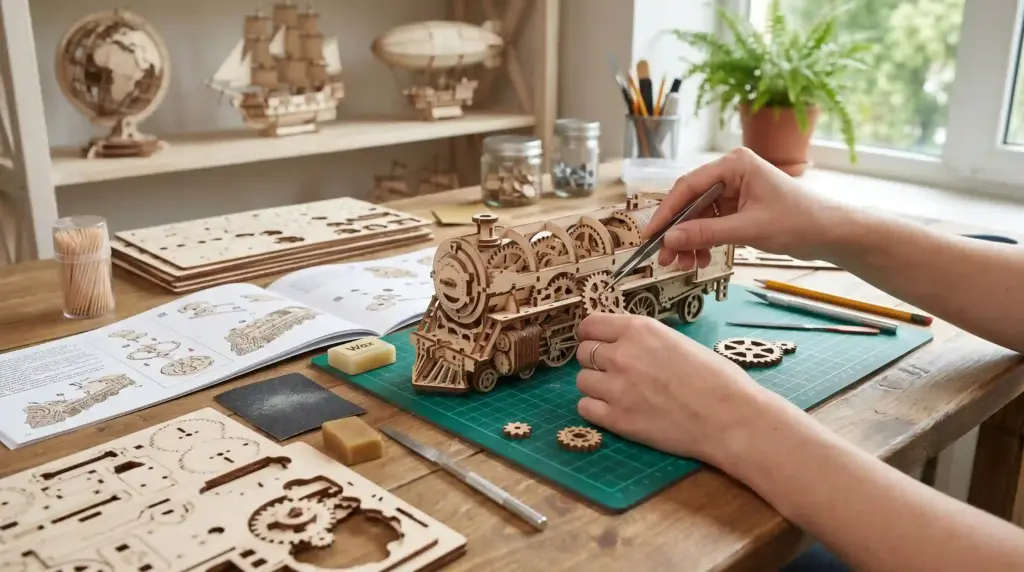
Most 3D wooden puzzle instructions technically allow assembly without additional tools, but a few simple accessories make the process dramatically smoother.
The most useful beginner tools are:
- fine sandpaper;
- toothpicks;
- wax;
- small tweezers;
- a craft knife;
- soft cloth or brush.
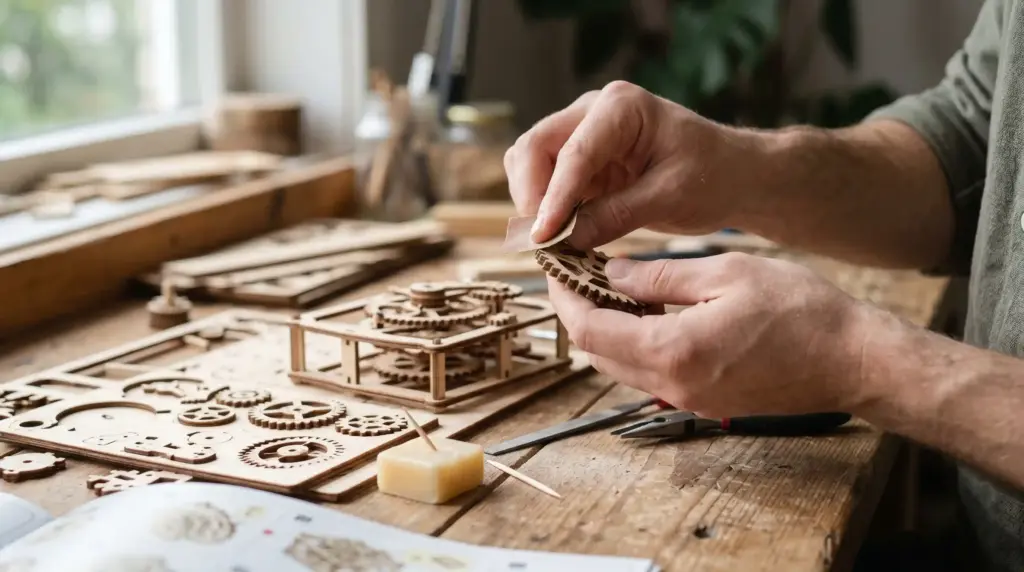
Sandpaper matters more than many people expect. Laser-cut wood sometimes leaves tiny burn marks or rough edges that create friction during assembly. Light sanding helps pieces slot together more smoothly and reduces pressure on delicate joints.
Wax is equally important for moving parts.
Mechanical gears, rotating shafts, and sliding elements often work poorly when assembled dry. Applying a small amount of wax to friction points helps mechanisms move naturally without forcing the structure.
Toothpicks become surprisingly useful during alignment. They help apply wax precisely, push small tabs gently into place, and reach narrow spaces without damaging surrounding parts.
A craft knife should be used carefully and only when necessary. Occasionally, tiny wooden fibers remain attached after removing pieces from plywood sheets. Cutting those fibers cleanly prevents cracking.
Many experienced hobby builders also keep a small container nearby for spare parts and unfinished components. This sounds simple, but it prevents one of the most common beginner problems: losing tiny pieces halfway through the assembly process.
Do you need glue for 3D wooden puzzles?
Most wooden puzzle models are designed to work without glue because the interlocking parts hold the structure together naturally. Glue is usually only useful for damaged or loose sections.
Why do wooden puzzle parts feel too tight?
Laser-cut wooden pieces sometimes contain tiny rough edges or wood fibers. Light sanding usually reduces friction and helps parts fit together more smoothly.
What wax should you use for mechanical wooden models?
Most mechanical wooden models work well with standard modeling wax or the small wax block often included inside the package.
Step-by-Step Wooden Puzzle Assembly for Beginners
Understanding how to build 3d wooden puzzles becomes much easier when the process is broken into smaller stages.
Step 1: Read the instructions before removing any parts
This sounds obvious, but many assembly mistakes happen because beginners start punching out pieces immediately. Looking through the full visual guide first helps identify:
- delicate sections;
- repeating parts;
- moving mechanisms;
- difficult alignment stages.
It also prevents accidentally removing components too early.
Step 2: Remove pieces slowly using gentle pressure
Never twist wooden pieces aggressively from plywood sheets. Instead, press gently around attachment points until the part loosens naturally.
If resistance feels uneven, stop and check for remaining laser-cut connections. Forcing the piece usually causes cracks near thin edges.
A craft knife helps separate stubborn fibers safely.
Step 3: Sand rough edges before assembly
This step is often skipped by beginners, but it dramatically improves the building experience.
Light sanding:
- reduces friction;
- prevents splintering;
- improves gear movement;
- protects delicate joints.
Even 10–15 seconds of sanding can make assembly noticeably smoother.
Step 4: Test moving parts before continuing
Mechanical sections should move freely before the next layer blocks access. If something already feels stiff, adding more pieces usually makes the problem worse later.
Most movement issues come from:
- excess friction;
- reversed gear orientation;
- misaligned shafts;
- overly tight pressure.
Step 5: Slow down near delicate decorative sections
Thin railings, miniature windows, rotating levers, and decorative trim often require the lightest touch. Many beginners become overconfident after finishing larger sections and accidentally break fragile details near the end.
That’s completely normal.
Mechanical wooden models reward consistency more than speed.

What Should You Do if a Wooden Puzzle Part Breaks?
Almost everyone breaks a piece eventually. Even experienced builders occasionally apply uneven pressure or miss a hidden attachment point.
The important thing is not panicking immediately.
Small cracks can often be repaired carefully with minimal wood glue and light pressure. Allowing the piece to dry fully before continuing usually prevents additional damage.
If the broken section affects movement, sanding becomes especially important after repair. Excess glue residue may create friction that blocks nearby mechanical parts.
Sometimes replacement parts are included inside the package for delicate components. It’s worth checking carefully before attempting repairs.
Another common issue involves warped pieces. Thin wooden parts occasionally bend slightly due to humidity changes. Gentle pressure during assembly usually corrects minor warping naturally.
Misaligned gears create different symptoms:
- clicking sounds;
- resistance during rotation;
- incomplete movement;
- gears slipping unexpectedly.
In most cases, the solution is tracing the mechanism backward step by step rather than forcing rotation harder.
Mechanical wooden puzzles behave more like miniature engineering systems than ordinary crafts. Small alignment problems tend to affect the entire structure later.
Why do mechanical wooden puzzle gears stop moving?
Gears usually stop moving because of excess friction, reversed assembly, uneven pressure, or unsanded edges interfering with rotation.
Can broken wooden puzzle pieces be repaired?
Yes. Small cracks are often repairable with minimal wood glue and careful alignment before continuing the assembly process.
How do you avoid breaking delicate wooden parts?
Gentle pressure, slow removal from plywood sheets, and checking attachment points carefully help prevent most accidental breaks.

Which 3D Wooden Models Are Easier for Beginners?
Not every model feels equally beginner friendly, especially for people learning how to assemble 3d wooden puzzles for the first time.
Simpler projects usually have:
- fewer moving parts;
- larger interlocking sections;
- wider wooden tabs;
- less fragile decorative detail;
- shorter assembly time.
Architectural models, smaller mechanical builds, and straightforward vehicles are often easier starting points than highly complex clockwork mechanisms.
Marble runs can also be enjoyable for beginners because the movement system becomes visually understandable during assembly. Watching sections work gradually helps builders spot alignment problems early.
Intricate clocks, dense gear systems, and advanced mechanical safes typically require more patience and precision.
There’s nothing wrong with starting simple.
Most experienced hobby enthusiasts developed confidence by completing smaller projects first before moving toward larger mechanical constructions. The assembly process becomes far less intimidating once the basic handling techniques feel familiar.
Frequently Asked Questions About Building 3D Wooden Puzzles
Many beginner frustrations come from small handling mistakes rather than assembly difficulty itself.
How long does it take to build a 3D wooden puzzle?
Simple models may take one or two hours, while detailed mechanical projects can require several evenings depending on complexity.
Should you sand every wooden piece before assembly?
Not always, but lightly sanding rough edges usually improves fit and reduces friction during assembly.
Why are my wooden puzzle parts snapping?
Parts usually break because of twisting pressure, hidden attachment points, or forcing tight connections too aggressively.
What should you do if gears stop moving?
Check for excess friction, reversed parts, unsanded edges, or uneven pressure inside the mechanism before continuing assembly.
Are mechanical wooden models suitable for beginners?
Yes, especially simpler models with fewer moving parts and larger structural pieces.
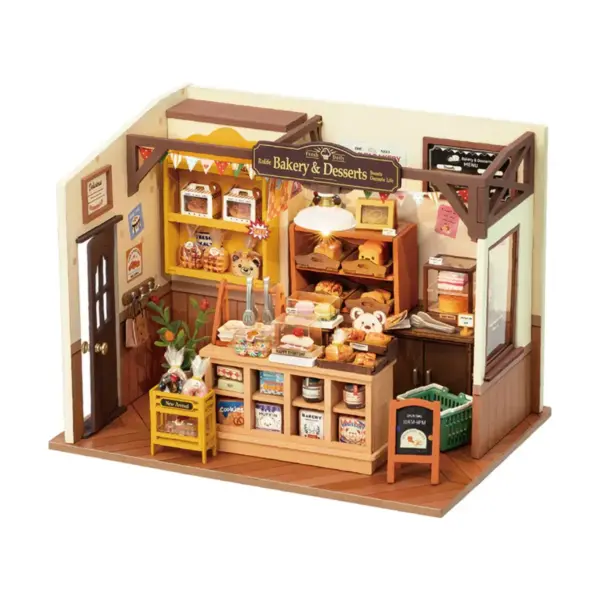
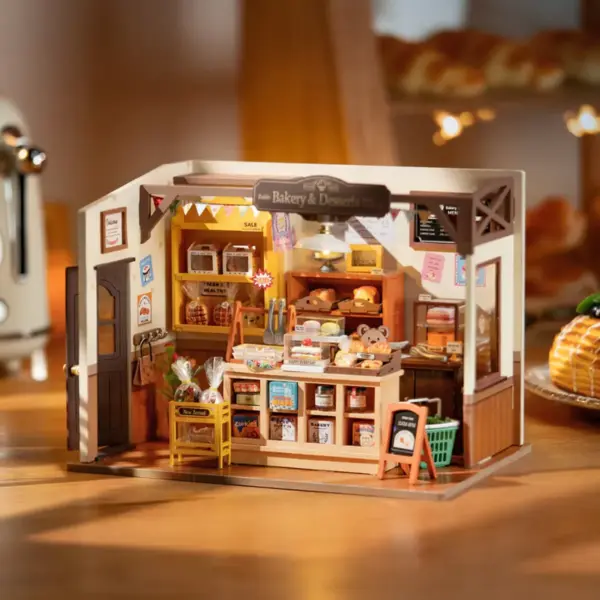
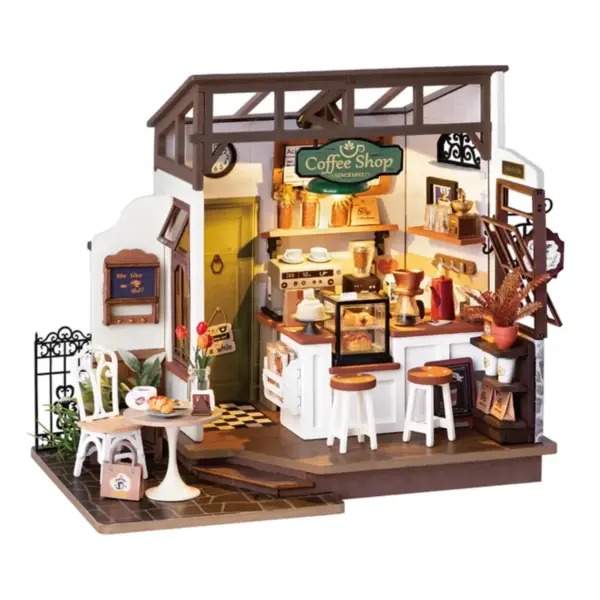
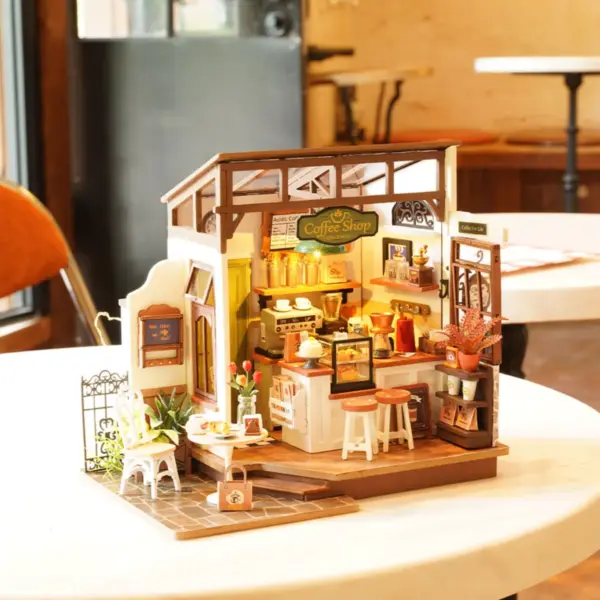
Beginner-Friendly Wooden Models for Relaxed Crafting Sessions
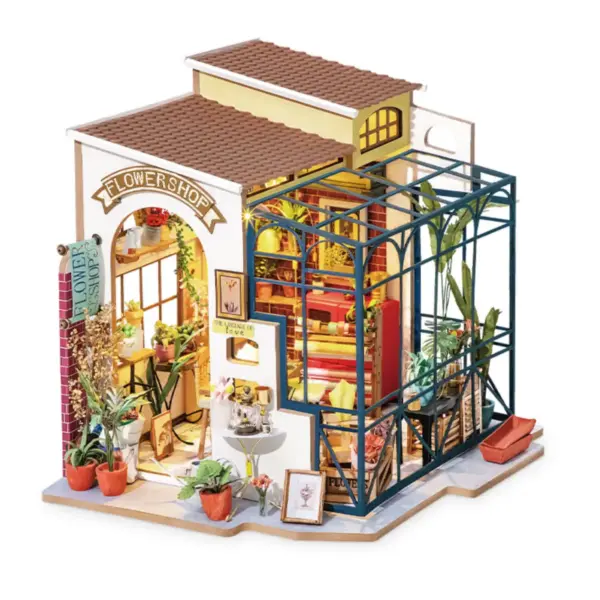
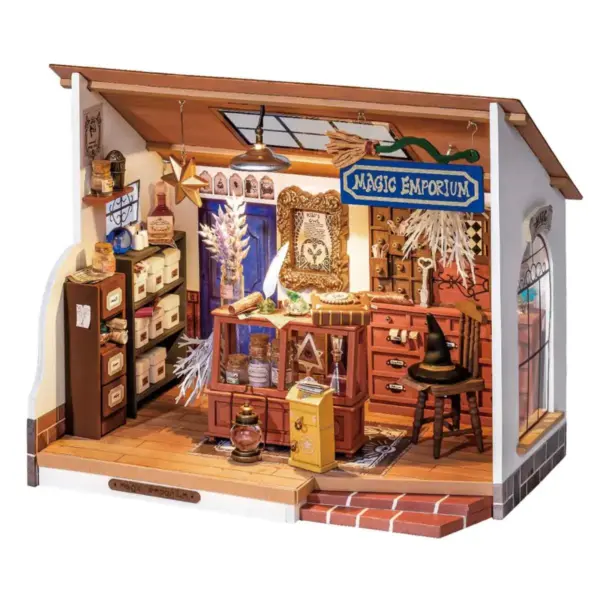
Some wooden mechanical models feel especially approachable for first-time builders thanks to simpler structures and more forgiving assembly flow.






Building Wooden Models Gets Easier Once the Process Feels Familiar
Most beginners assume successful assembly depends on perfect precision from the very beginning. In practice, careful pacing matters much more than flawless technique.
Small habits — sanding edges, slowing down during delicate steps, testing moving parts early — gradually make the entire process smoother and more enjoyable.
Even experienced hobby builders occasionally misalign gears or crack a fragile section. That’s simply part of working with laser-cut wood and intricate mechanical details.
The models that feel intimidating at first often become surprisingly relaxing once the assembly rhythm starts making sense.