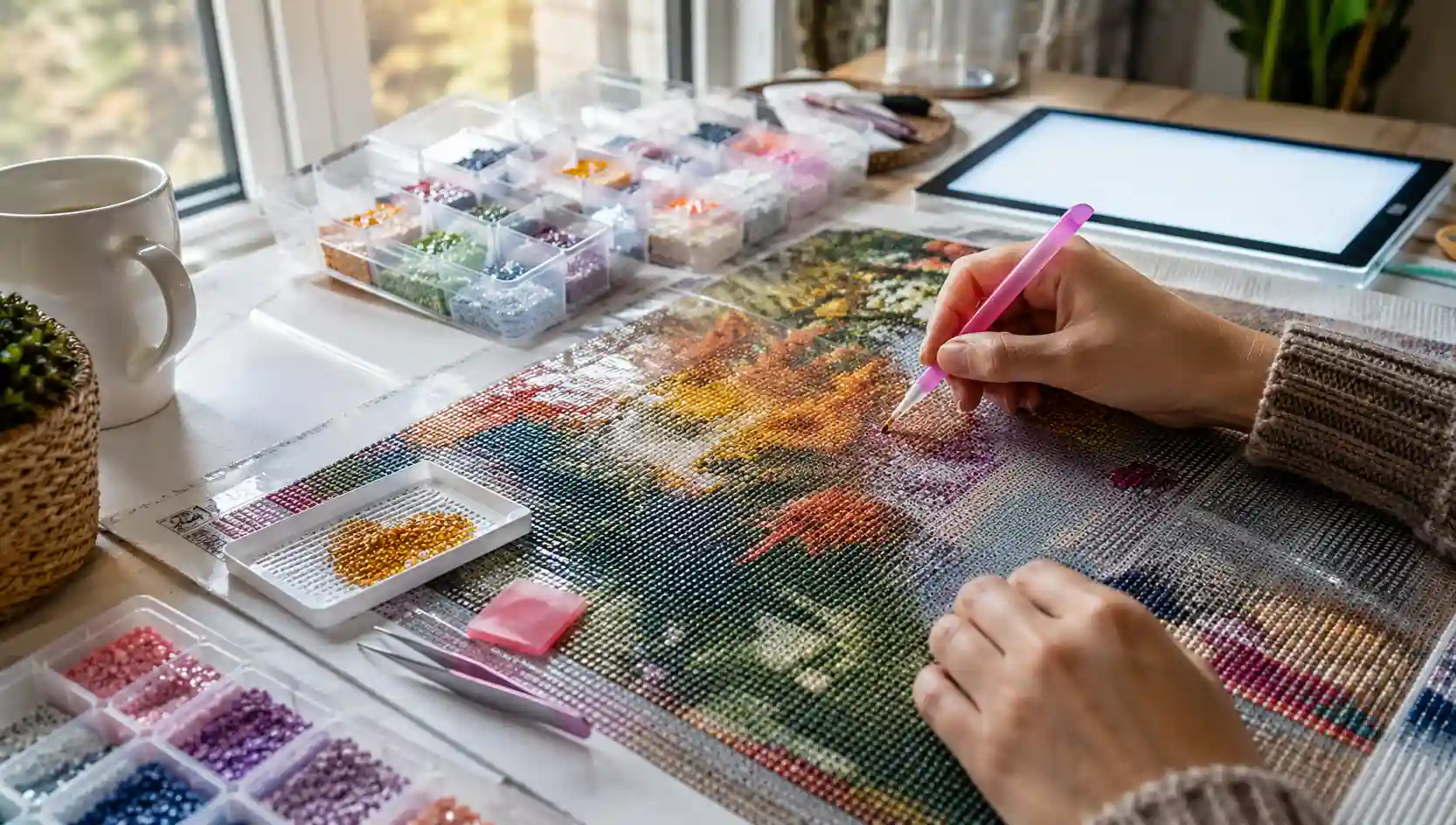
Diamond painting gets much easier once you understand why drills shift, adhesive weakens, and rows stop lining up properly.
Why Diamond Painting Mistakes Happen So Easily
Why Small Diamond Painting Mistakes Turn Into Bigger Problems
Most diamond painting problems start quietly. A slightly bent canvas corner, a dusty adhesive layer, or uneven pressure from the applicator pen may not look serious at first. After several hours, though, those tiny issues usually become much harder to fix.
That’s why experienced crafters spend more time preparing their workspace than many beginners expect.
A clean and stable setup affects almost everything:
- how straight the drills sit;
- how well the canvas adhesive holds;
- how quickly sections can be completed;
- how often popping drills appear later.
One common example is static electricity inside sorting trays. When drills cling together, it becomes difficult to place them evenly. Many people assume the drills themselves are defective, while the actual problem comes from dry air or plastic friction.
Canvas tension is another overlooked detail. If the canvas still contains shipping folds, the grid may distort slightly. That distortion often leads to crooked rows even when the drills are placed carefully.
The same applies to pink wax. Fresh wax gives better control, while overloaded wax can leave residue between resin rhinestones. Small handling habits matter more than expensive accessories.
For beginners especially, diamond painting tips and tricks are less about speed and more about consistency. Straight rows, clean sections, and stable adhesive usually come from simple routines repeated carefully.
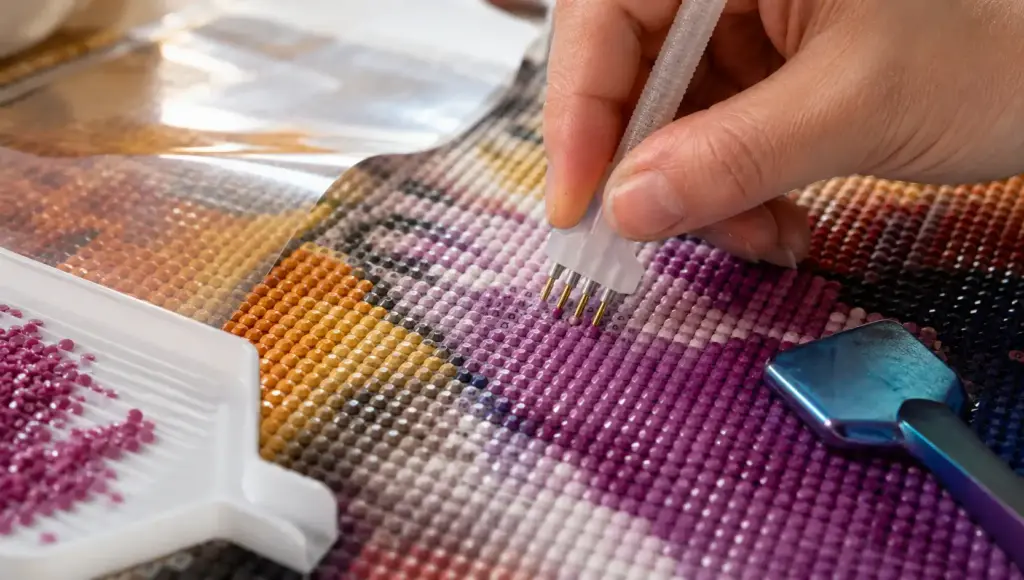
How to Keep Diamond Painting Drills Straight
Crooked drills usually happen because alignment errors build gradually across a section. Even a tiny shift near the beginning can affect the entire row later.
Why drills slowly drift out of alignment
Several things can cause drifting rows:
- uneven canvas surface;
- too much pressure on one side of the applicator pen;
- inconsistent drill spacing;
- working without section boundaries;
- low visibility in darker colors.
A light pad helps more than many people realize. Dark drills on dark symbols can strain the eyes, especially during long sessions. Better visibility makes spacing errors easier to catch early.
Another useful habit is sectioning the canvas into smaller working zones using washi tape or release paper. Large uncovered areas often collect dust and make alignment harder to control.
How to straighten rows without removing every drill
A straightener tool or even flat tweezers can gently shift several drills at once. The trick is to correct rows while the adhesive still allows movement.
Press lightly along the edge of the drills instead of pushing downward.
If rows already hardened into place:
- Warm the section slightly with room-temperature airflow.
- Lift only the affected drills.
- Re-align them against the printed grid.
- Roll the section gently afterward.
Many experienced hobbyists also rotate the canvas while working. Changing angles makes uneven spacing easier to notice.
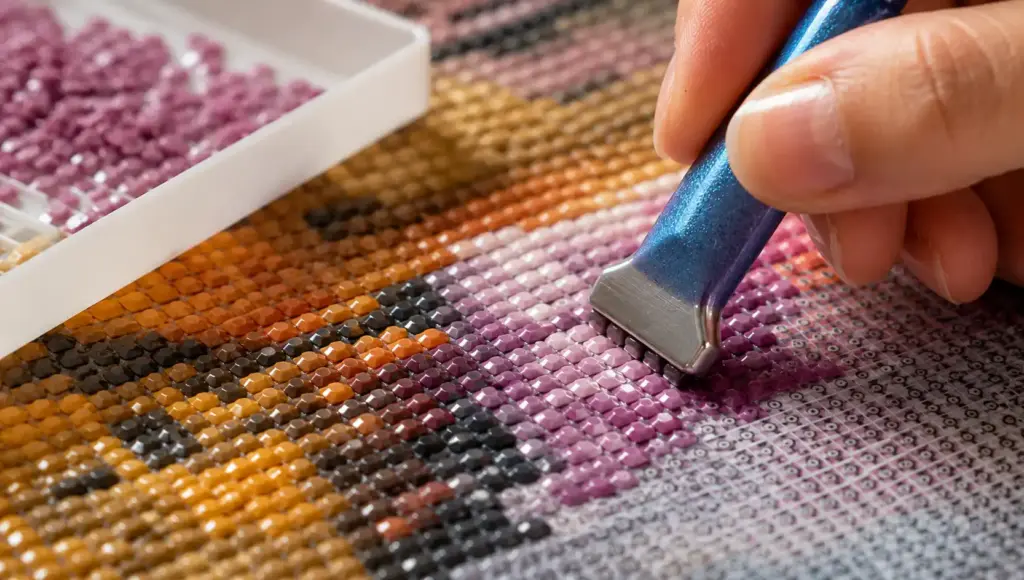
What to Do When a Diamond Painting Canvas Is Not Sticky
Losing adhesive strength is one of the most frustrating diamond painting problems because it interrupts the entire workflow.
Why the canvas adhesive stops working
Most adhesive issues come from contamination rather than poor manufacturing.
Typical causes include:
- dust particles;
- pet hair;
- skin oils;
- uncovered sections left exposed too long;
- using regular paper instead of release paper.
Parchment paper can also create problems if it is not silicone-coated. Some types stick permanently to the adhesive layer.
Temperature matters too. Extremely dry rooms may harden the sticky background faster than expected.
How to restore stickiness safely
For lightly affected areas, a baby wipe without alcohol can remove surface dust. The section must dry completely before drills are placed again.
For more difficult areas:
- use a tiny amount of clear craft glue;
- spread it thinly with a brush;
- allow partial tackiness before continuing.
Avoid soaking the canvas. Excess moisture may warp the printed grid underneath.
Masking tape can help protect edges that repeatedly collect dust during longer projects.
Many diamond painting troubleshooting issues become preventable once unused sections stay covered consistently.
Diamond Painting Hacks That Save Time and Reduce Mistakes
Some diamond painting hacks are surprisingly simple, yet they make long sessions much smoother.
Use a grid ruler for square drills
A grid ruler keeps square drills aligned while reducing gaps between rows. It works especially well on large color-block sections.
Store drills by DMC codes
Mixing colors is more common than many people admit. Labelled storage containers save enormous amounts of time during larger canvases.
Freeze static-heavy drills briefly
A few minutes in a cool room can reduce static electricity inside plastic trays.
Replace wax before it hardens
Old pink wax loses grip and forces extra pressure on the drills, increasing alignment mistakes.
Work in smaller sections
Sectioning improves accuracy and prevents accidental hand contact with exposed adhesive.
People searching for how to do diamond painting faster often focus only on speed tools. In reality, reducing mistakes is what saves the most time overall.
Fixing Popping Drills in Diamond Art
Popping drills happen when drills lift slightly from the canvas after placement. This issue appears more often with square drills because tight spacing creates pressure between neighboring pieces.
Why popping drills happen
The most common causes are:
- uneven canvas surface;
- oversized acrylic drills;
- trapped air bubbles;
- excessive pressure during placement;
- drills packed too tightly together.
Resin rhinestones usually fit more consistently than lower-density acrylic drills, which explains why some projects develop more lifting problems than others.
How to stop drills from lifting
Rolling the completed section with a soft craft roller helps settle drills evenly into the adhesive.
If individual drills continue popping:
- Remove the affected drill.
- Check for debris underneath.
- Re-seat it carefully.
- Apply gentle pressure across surrounding drills.
Some crafters also seal finished paintings using diluted Mod Podge or specialized sealants. The sealing process can help stabilize stubborn sections, especially before framing.
How to Flatten a Diamond Painting Canvas Properly
Fold lines can distort the printed grid and make drill placement much harder than necessary.
How to flatten curled or folded canvas safely
The safest method is gradual flattening.
Try this approach:
- place the canvas under several heavy books overnight;
- keep the protective film attached;
- avoid direct heat;
- flatten from the center outward.
For stubborn curls, reverse-roll the canvas gently for a few hours.
Should you iron a diamond painting canvas?
Direct ironing is risky because heat may damage the adhesive layer permanently.
If heat is absolutely necessary:
- place thick fabric above the back side;
- use very low temperature;
- never touch the adhesive side directly.
Most wrinkles relax naturally after several days once the canvas remains flat.
Frequently Asked Questions About Diamond Painting Tips and Tricks
Small workflow adjustments often solve the most common diamond painting frustrations before they become serious problems.
How do you make diamond painting look neater?
Working in small sections, using a light pad, and correcting alignment early usually creates cleaner rows and more consistent spacing.
Why are my drills not sticking to the canvas?
Dust, skin oils, or exposed adhesive are usually responsible. Cleaning the area gently and keeping unused sections covered helps preserve tackiness.
How do you stop static in diamond painting drills?
Reducing dry air, wiping trays carefully, and storing drills in sealed containers can minimize static electricity problems.
What causes bubbles in a diamond painting canvas?
Air trapped under the adhesive layer during packaging or temperature changes can create bubbles. Small bubbles can often be flattened gradually using a roller.
Should finished diamond paintings be sealed?
Sealing is optional. Many people seal paintings before framing to reduce shifting drills and protect the surface from dust.
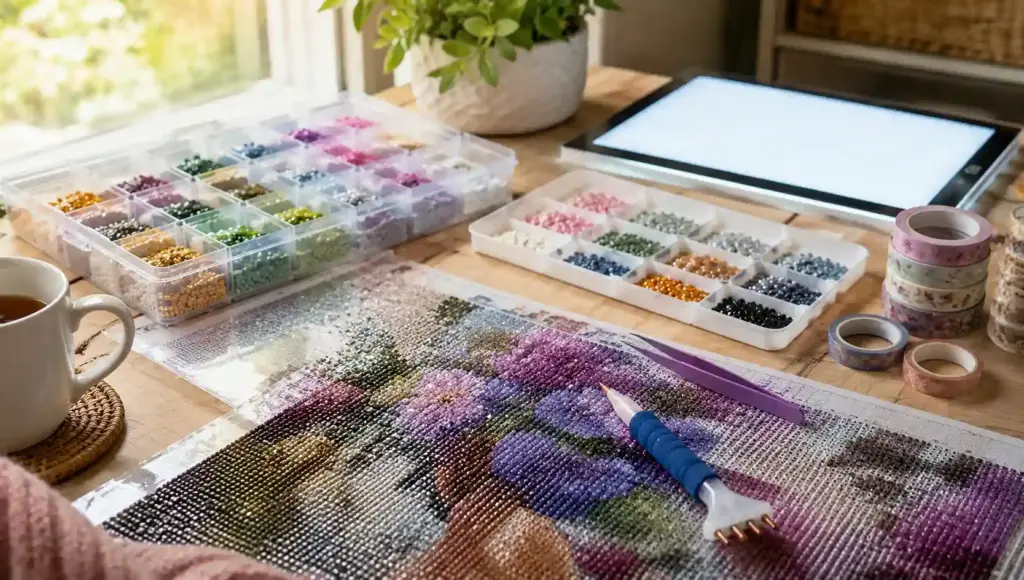
Helpful Accessories for a Smoother Diamond Painting Workflow
A well-organized setup often reduces mistakes more effectively than rushing through larger sections.



Final Thoughts
Diamond painting becomes far more enjoyable once small technical problems stop interrupting the process. Straight rows, stable adhesive, and organized drills usually come from simple habits rather than complicated techniques.
Most experienced crafters develop their own routines over time. Some rely heavily on sectioning, others prefer light pads or multi-placer tools. The important part is understanding why problems happen in the first place.
A slower and more consistent workflow often produces cleaner results than trying to finish large sections quickly. Even small adjustments — like protecting exposed adhesive or checking alignment earlier — can completely change how a project feels from start to finish.